Measure the footprint of your bed. In a small bedroom it's likely the single largest object you own — a queen takes up roughly three square metres of floor. Now ask what that floor is doing for you. If your bed sits on a low frame or a divan, the answer is: almost nothing. The largest storage volume in the room is sealed shut, while suitcases colonise the wardrobe top and spare bedding migrates to a chair.
The fix isn't buying storage furniture. It's raising the bed you already sleep in to a height where the space underneath becomes usable — and that's a frame decision, made once.
Why 14 inches is the magic number
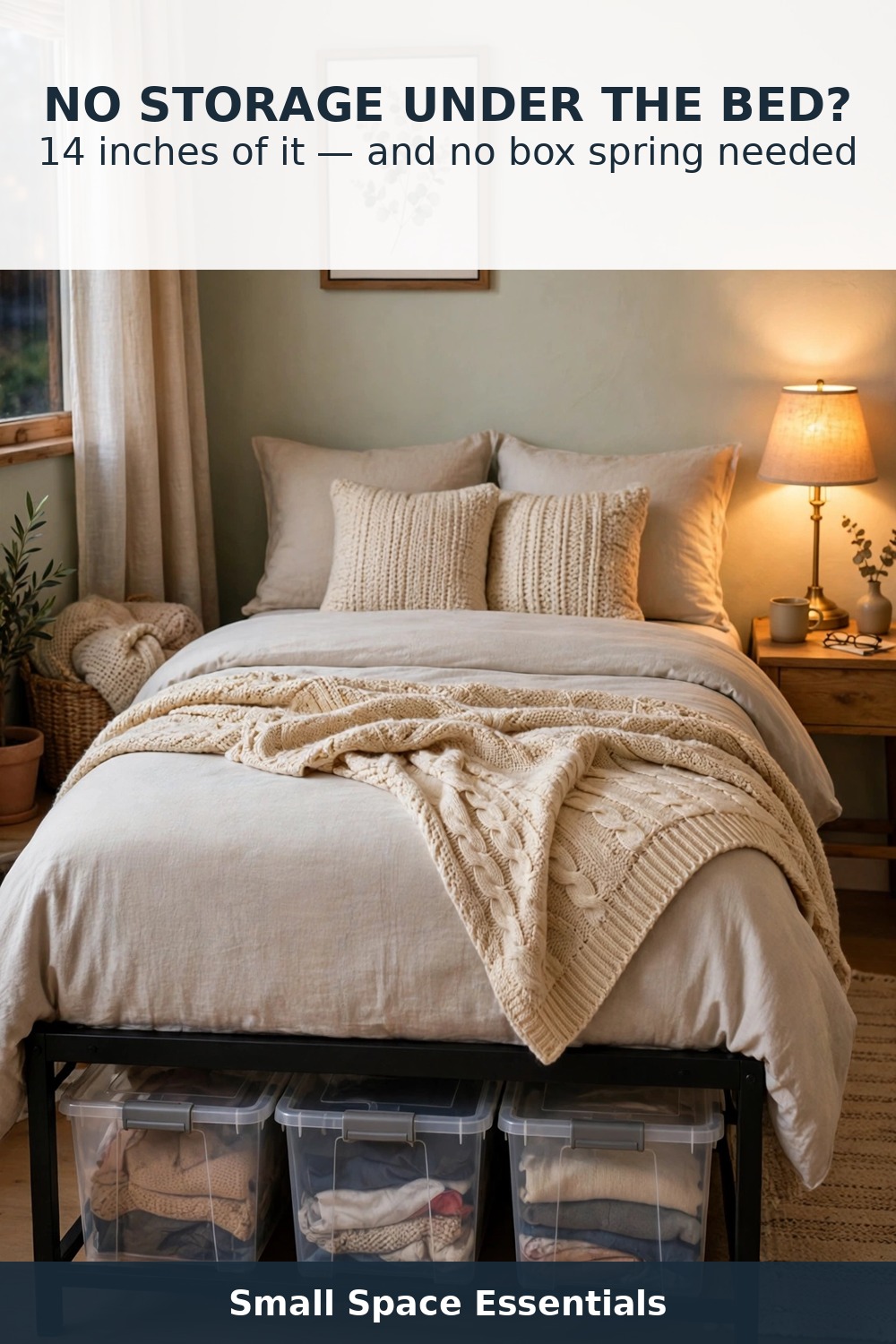
The platform frame in our pin — ZINUS' SmartBase — stands 14 inches high, and the height is the whole point. Fourteen inches of clear vertical space swallows the things that defeat normal under-bed storage: standard storage boxes with lids, a cabin suitcase standing on its side, vacuum bags of bedding with room to spare. At eight or nine inches — typical of low designer frames — you're limited to flat trays and good intentions.
It also replaces the box spring entirely: the steel platform supports the mattress directly, which removes a bulky, expensive, storage-free object from the room altogether. Assembly is tool-free — the frame unfolds and locks — and for renters there's a quiet bonus: nothing attaches to the room. When you move, the cupboard moves with you.
Small homes rarely need more furniture. They need the furniture they have to start pulling double duty.
Zoning your new cupboard
Under-bed space fails when it becomes a junk drawer you lie on top of. Zone it like a wardrobe:
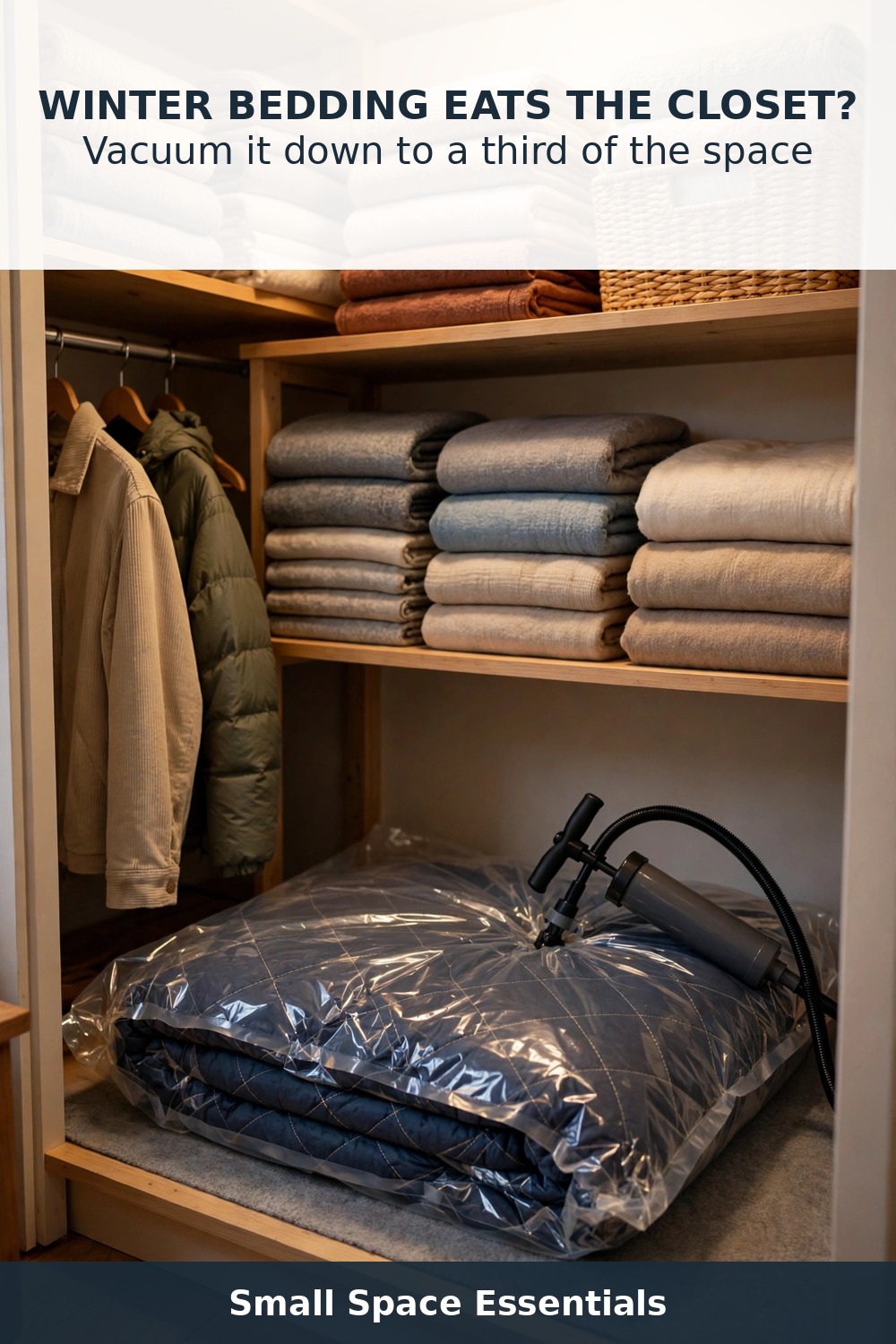
- Far side (hardest to reach): the archive. Out-of-season clothes in vacuum bags, spare duvets, the Christmas box. Things you touch twice a year.
- Near side: the rotation. Luggage, guest bedding, the gym bag — in lidded boxes you can slide out one-handed.
- Label the box ends, not the tops. You read the ends when they're slid under; tops are for a storage unit you'll never build.
- Leave one empty slot. A full cupboard can't accept one new thing without a reshuffle. The empty slot is what keeps the system honest.
The guest-room effect
Here's the change nobody predicts: once the luggage, spare bedding and seasonal clothes disappear under the bed, the small bedroom stops reading as storage-with-a-bed-in-it. The wardrobe closes. The chair becomes a chair. And when guests come for Christmas, the guest bedding is thirty seconds away instead of a loft expedition — pair the frame with the hotel pillows from the finds list and the spare bed stops being an apology.
It's the largest single storage upgrade available to a small home, and it hides under the one piece of furniture you were never going to remove. That's why this story is the most-loved on the site: it doesn't ask for space. It reveals the space was already there.
Before you order, do the two measurements that decide everything: your ceiling height minus the frame and mattress (you still want to sit up in bed comfortably), and the height of the tallest box or case you plan to store — it must clear the frame's side rail with a centimetre to spare. Fourteen inches suits most standard storage boxes, but your suitcase is the real examiner. Measure it, and the frame either passes or it doesn't. That's the whole buying decision, and it takes ninety seconds with a tape measure.