The pile forms by physics, not laziness. Everyone enters through the same door, at roughly the same spot, carrying roughly the same need to be rid of their shoes. In a big house that spot is a mudroom. In a small flat it's one square metre of hallway — which also has to admit guests, prams, shopping bags and you, sideways, with a pizza.
Winter makes it three times worse. Summer's two pairs per person become boots, trainers, work shoes and the waterproof pair, all of them arriving home damp. Spread flat, a family's winter footwear can cover the entire entryway floor. The answer isn't a bigger hallway. It's to stop storing shoes in two dimensions.
Go vertical, stay narrow
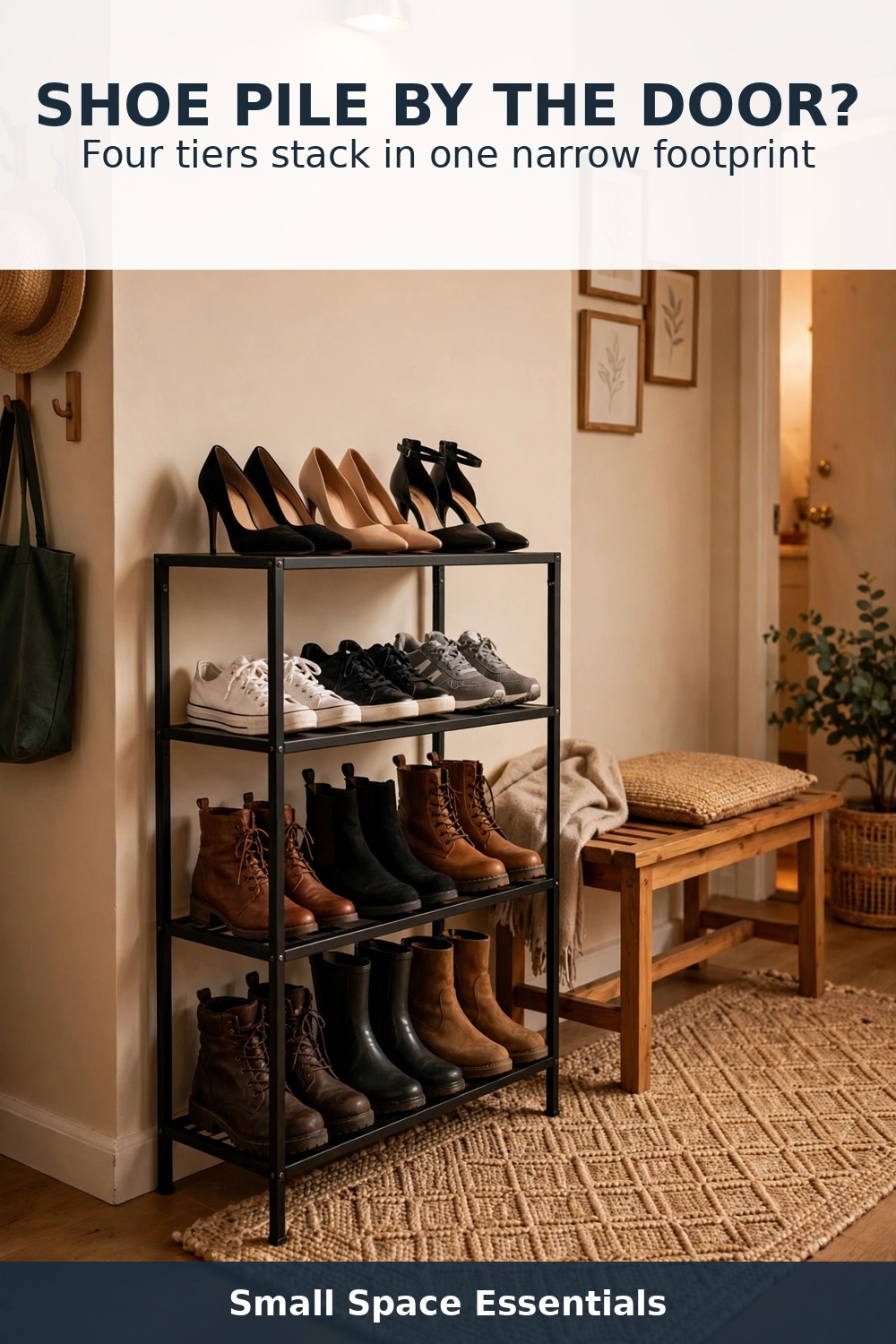
The rack from our pin — SONGMICS' 4-tier — stacks footwear on fabric shelves in a footprint barely wider than a doormat. Four pairs high instead of eight pairs wide. The fabric shelves matter more than they sound: they flex for boot shapes, they don't clang, and wet soles drip onto a surface that wipes clean rather than pooling on the floor.
Two renter-friendly details sold us on it. It assembles without tools — push-fit poles and shelves — so there's nothing to drill and nothing to patch later. And it can split into two smaller two-tier racks, which means the same purchase works in this flat's hallway and the next flat's bedroom corner. Small-home furniture that survives a move is the only kind worth buying.
The entryway sets the emotional temperature of the whole home. A clear floor says: you can relax now.
The system that keeps it sorted
A rack alone becomes a vertical pile within a month. The rules that keep it working are boring and absolute:
- One tier per person, or one tier per job. Daily shoes on the easy tiers, occasion shoes up top. If a tier overflows, a pair leaves the flat — the rack is the limit, not a suggestion.
- Boots get the floor spot beside it, not on it. Tall boots on a drip tray next to the rack keep the shelves for everything else and the hallway dry.
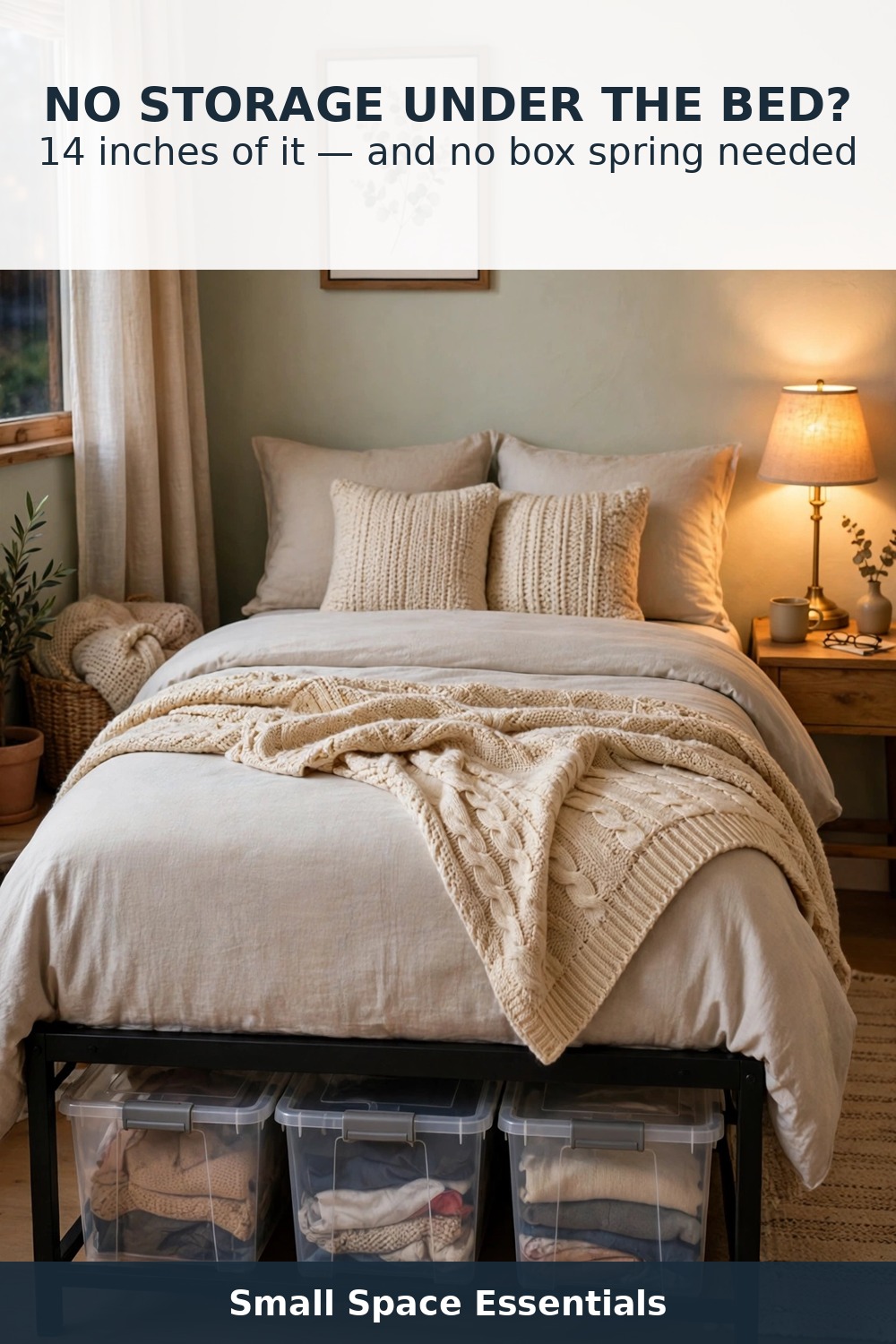
- Out-of-season pairs don't live here. Sandals in January go in a box under the bed (see the under-bed story). The entryway is a working zone, not an archive.
One square metre, fully employed
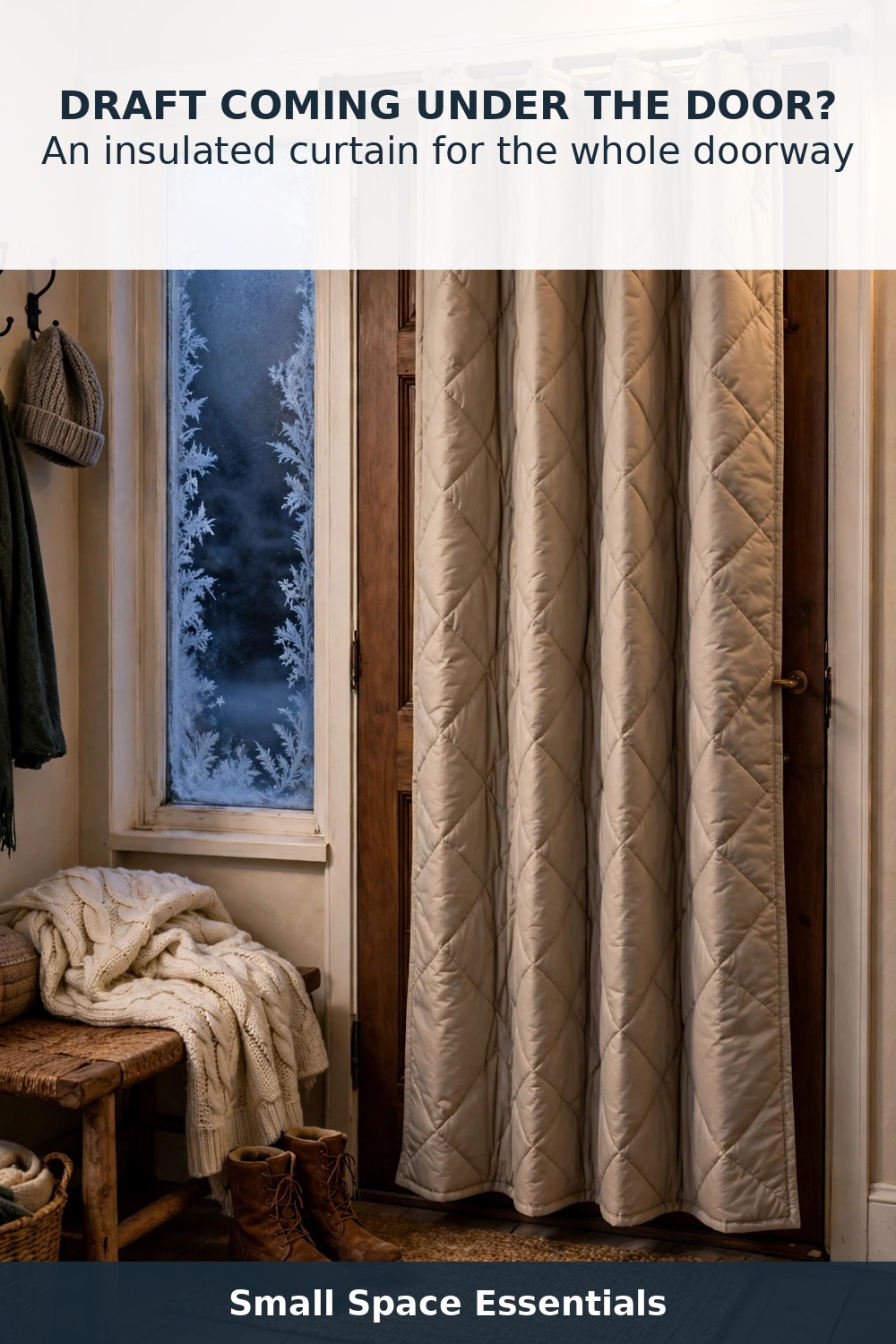
With the shoes vertical, the rest of the entryway system clicks into place: the thermal curtain from our drafty-door story hangs over the door itself, a small gallery of frames (hung without holes, naturally) takes the blank wall, and the floor — the whole floor — is just for walking. Guests stop performing the entryway shuffle. So do you, twice a day, every day. Few upgrades pay out that often.
One more thing the rack quietly fixes: the floor itself. Shoes stored flat trap damp against wood and laminate, and the grit they carry gets walked through the flat. Lifted on fabric shelves, soles dry overnight, the hallway sweeps in thirty seconds, and the doormat goes back to being the only thing on the floor that isn't a foot. In a small home, the entryway is also the first metre of every room that follows it — keep that metre clear and the whole place breathes easier. It's a modest piece of furniture doing an immodest amount of work, which is exactly the kind of find this site exists for.