You know the exact spot. The two steps in front of the door where the floor turns cold, where the hallway rug never quite warms up, where you can feel the weather on your ankles in January. In a small home, a drafty front door doesn't just chill one corner — the entryway is usually open to the living room, the kitchen, sometimes the whole flat. One bad seal taxes every room you heat.
Renters get a short menu of fixes. You can't replace the door. You probably can't re-hang it, re-seal the frame with anything permanent, or invoice your landlord for the heating bill his door is inflating. So most of us start with the classic: a door sweep or a foam draft excluder along the bottom. And it helps — a little. Because the bottom edge is only one of four gaps.
Why the sweep only fixes a quarter of the problem
Do the tissue test on a windy evening: hold a tissue slowly around the whole door frame. Most people find the bottom gap behaves after a sweep, but the sides and top keep fluttering. Warped frames, settled hinges and years of paint layers leave long, thin gaps that no brush strip reaches. Cold air doesn't need a wide opening — a 2 mm slot running the full height of a door is a surprisingly effective radiator in reverse.
That's the gap a thermal door curtain is built for. Instead of sealing each edge separately, it covers the entire doorway with one insulated panel — thickened cotton filling inside an Oxford fabric shell — so the whole rectangle of leaks sits behind a blanket. The door behind it opens and closes exactly as before; you simply pass through the curtain, the way shops in cold climates have done for a century.
The cheapest room you will ever heat is the one the cold can't get into.
Hanging it without making a single hole
The MAGZO curtain from our pin is sized for doors up to 36″ × 82″, which covers most standard front doors. It hangs from a rod or hooks above the frame — in a rental, a tension rod inside the frame recess or adhesive hooks rated for the weight both work, and both come down clean in spring. Two details matter more than the hardware:
- Overlap counts. The curtain should extend a few centimetres past the frame on both sides and brush the floor at the bottom. A curtain that fits "exactly" seals nothing.
- Hang it on the warm side. Inside the flat, not in the porch or stairwell — you want the insulation between you and the cold air, and the curtain stays dry and clean.
- Keep the handle zone easy. Part the curtain at handle height as you pass through rather than dragging the whole panel; it becomes a one-second habit within a day.
What changes afterwards
The honest list: the hallway stops feeling like a separate climate, the floor by the door is walkable in socks, dust and corridor noise drop noticeably (an insulated curtain is also a sound curtain), and the heating runs shorter cycles because the room it serves is no longer leaking at one end. What it won't do is fix a window problem or a door that visibly doesn't close — if daylight shows through the frame in a solid line, that's a landlord conversation, curtain or not.
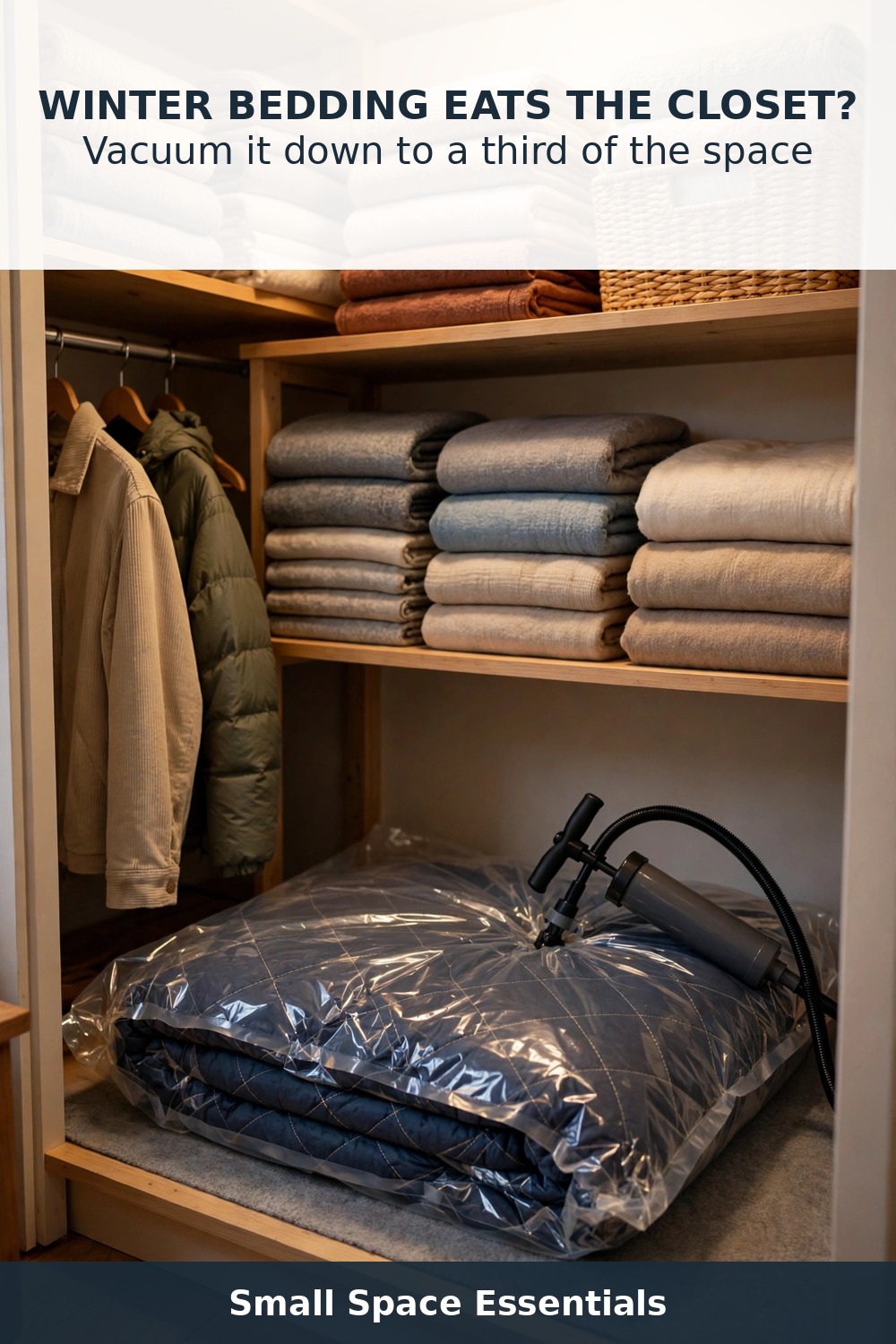
Come spring, the curtain rolls up and stores in almost no space — which is more than can be said for most winter fixes. Pair it with the seasonal swap (summer bedding vacuum-bagged away) and the entryway rack from the story below, and the smallest, coldest corner of the home becomes the most organised one. That's the whole philosophy here: one annoyance, properly fixed, at a time.